Still Here With Me
Dementia has taught me a lot about losing. I'm beginning to think it also has something to teach me about seeing.
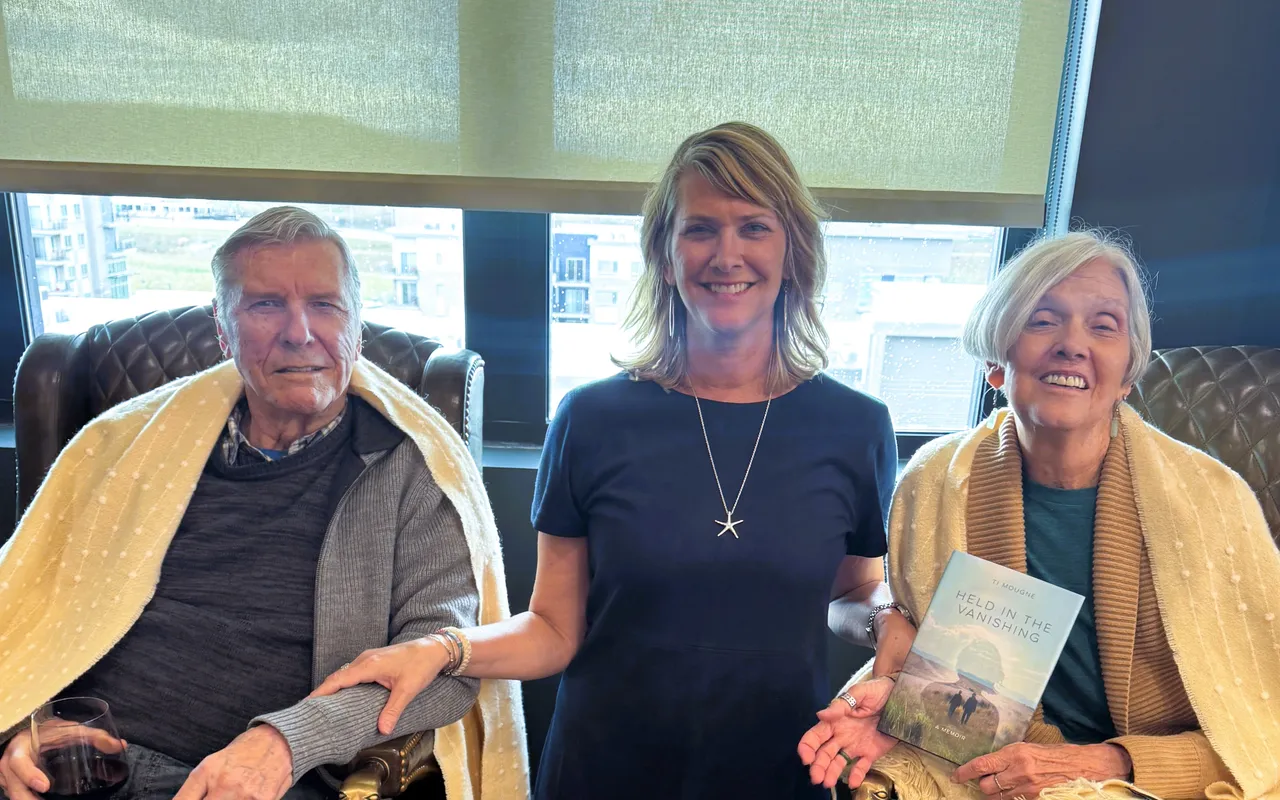
On August 29, 2026, I had the privilege of reading from my memoir, Held in the Vanishing, to my mom and dad and members of their community. The chapter I chose was “Still Here With Me” because it’s about grieving what dementia has taken while learning to notice—and love—the ways our loved ones remain.
One of the hard truths of dementia is that it can train a caregiver’s attention toward loss.
We become extraordinarily good at noticing what has changed: the word they can’t find, the story they’ve forgotten, the thing they can no longer do, the piece of independence we have to take away. And we have to notice those things. They matter. Grieving them is part of loving someone whose capacities are changing.
But if loss becomes the only thing our attention knows how to see, the people we love can begin to disappear before they’re actually gone.
That’s why the message in “Still Here With Me” matters to me. It isn’t about looking on the bright side or pretending dementia isn’t devastating. It’s something much more difficult: holding absence and presence at the same time.
My dad has lost the freedom of his joy rides, but the part of him that delights in the world still shows up in the clouds. My mom has lost much of her language, but she still laughs, hugs, colors, loves. Their ways of being themselves have changed, but they haven’t become only their losses.
And there’s something important for the caregiver in that, too. If we are always relating to our loved ones as the people they used to be, then every encounter becomes a comparison—and the present will almost always lose.
But if we can meet them as they are today, there may still be relationship available to us.
Not the relationship we wanted.
Not the one we remember.
But this one.
And I think that may be the deeper invitation of the chapter: Can we grieve those who are disappearing without overlooking who is still sitting beside us?
There was something pretty extraordinary about getting to share this reading and conversation with my parents, in the place they now call home.
Afterward, people stayed and talked with me about their own lives—their experiences with caregiving, grief, love, and loss. They were so heartfelt and generous with what they shared.
Every story was uniquely theirs, and yet there was so much we recognized in one another.
That’s what tonight became for me. Not really a book reading, but a room full of people sharing something deeply human with one another.
It felt good to be there together. ❤️
Written by Ti Mougne